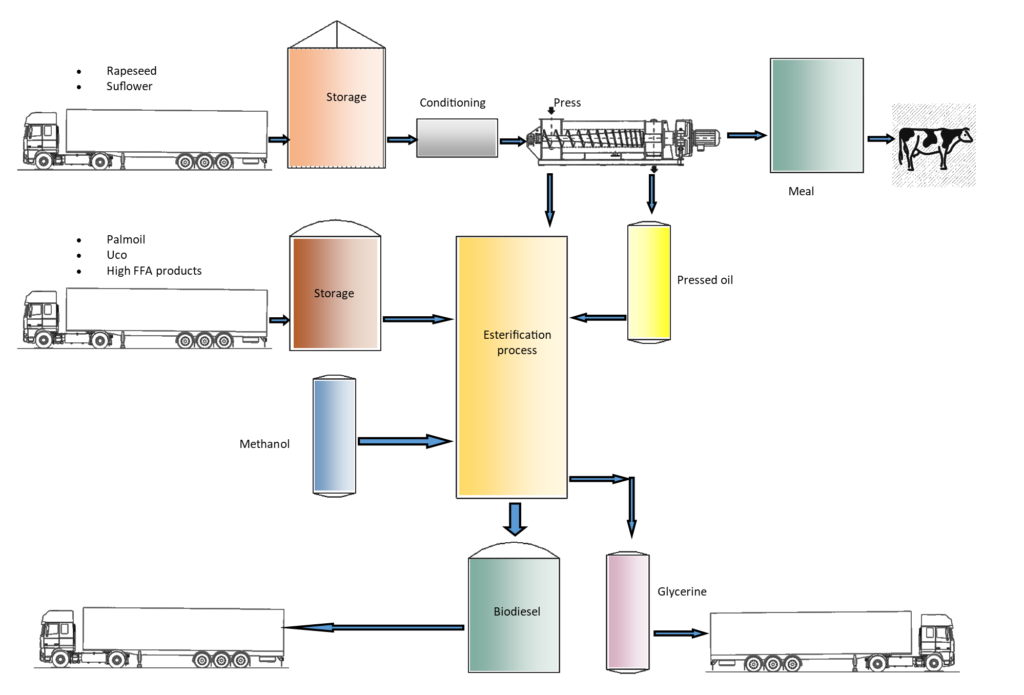
Esterification briefly explained
Since the late 1990s Biodiesel plants have been built worldwide. Biodiesel has become part of the petrol industry due to governmental legislation.
Feedstock
To even think of starting up a new biodiesel plant, feed-stock needs to be secured. Contracts for feed-stock, especially for the more difficult ones, have been and are being secured for a period of 10 years. A competitive mix of feed-stock has to be secured in order to keep up with the competition in the biodiesel market. Also, the off-take for the biodiesel plant has been secured.
Geelhoed can provide feed-stock security.
Products
Biodiesel will be produced to the required standards of the industry.
Glycerine, approximately 10% of the overall production, will be up to 90% quality and can be upgraded to Pharma quality.
The Potassiumsulphate (K2SO4), being a side product, can be sold as a fertiliser.
Geelhoed can provide the necessary off-take security.
Location
Due to the great bulk of materials, a biodiesel plant needs to be at a good transport location. Proper connections with waterways and highway roads are a must.
Storage
A proper discussion is necessary to determine the storage facilities. The amount of storage will depend on location, trade options and transport possibilities. Geelhoed will have an advisory role to determine what is suitable.
Experience
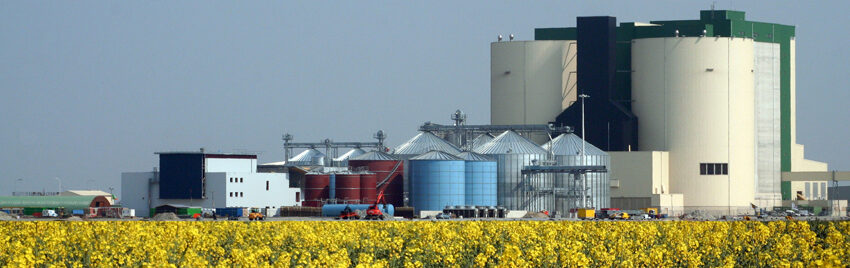
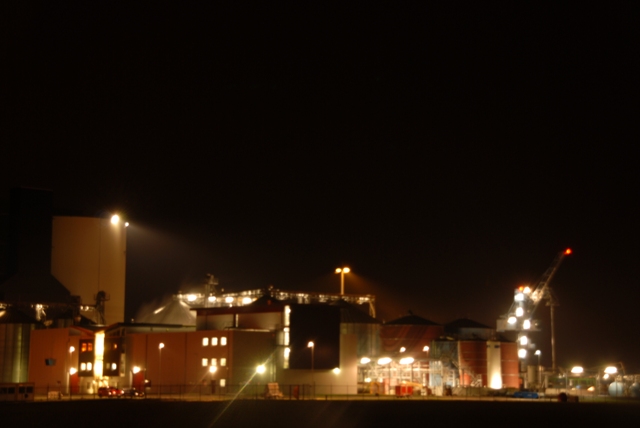
The first biodiesel plant has been designed and completed in the Eemshaven in the north of Holland. Excellent logistic possibilities were present for the enormous amounts of goods to be transported. Location is a first priority for a Biodiesel plant.
The plant at the time used rapeseed as a basis for the production of biodiesel. A press unit with a capacity of 180.000 tons of rapeseed was built together with a storage capacity for 3 months. The press would produce a minimum of 60.000 tons of rapeseed oil and 120.000 tons of rapeseed cake.The production capacity of Biodiesel was 65.000 tons a year. As a side product 7.500 tons of glycerine was produced.
The process
Our team will guide you through the various solutions in order to offer you the right product at the right place.
Basically, oil is mixed with methanol and a catalyst KOH (potassium hydroxide). This starts the esterification process. During this process Biodiesel is formed and the side product glycerin is being produced, approx. 10% of the total volume. By using KOH, K2SO4 is being formed, which can be used as a fertiliser. No waste is left over after the process.
It should be noted that up to 100% FFA (Free Fatty Acid) can be handled in the pre-esterification through an acid process.